Successful surgical outcomes depend heavily on postoperative care and owner compliance. Controlled activity, structured rehabilitation, and close observation are essential to protect the surgical repair and promote optimal healing.
Preparing Your Home
Before surgery, plan for:
A crate or gated area with non-slip flooring
Throw rugs or yoga mats on slick surfaces
Blocked access to stairs
A quiet environment that limits jumping and rough play
Keeping your pet separate from other pets and small children
Activity Restrictions
For the initial recovery period:
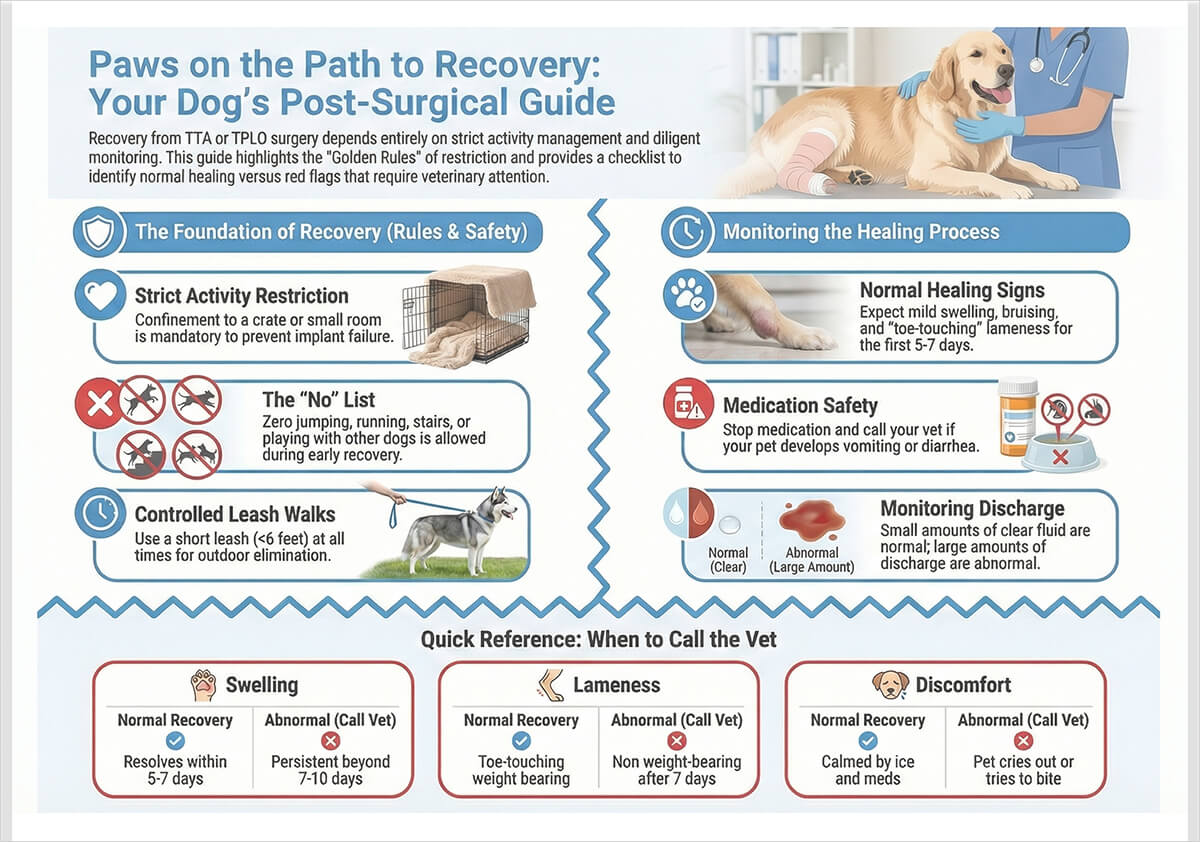
No running, jumping, stairs, or free roaming
Leash-only bathroom breaks using a short leash and sling
Excessive activity can lead to implant failure, pain, delayed recovery and potential for additional surgery.
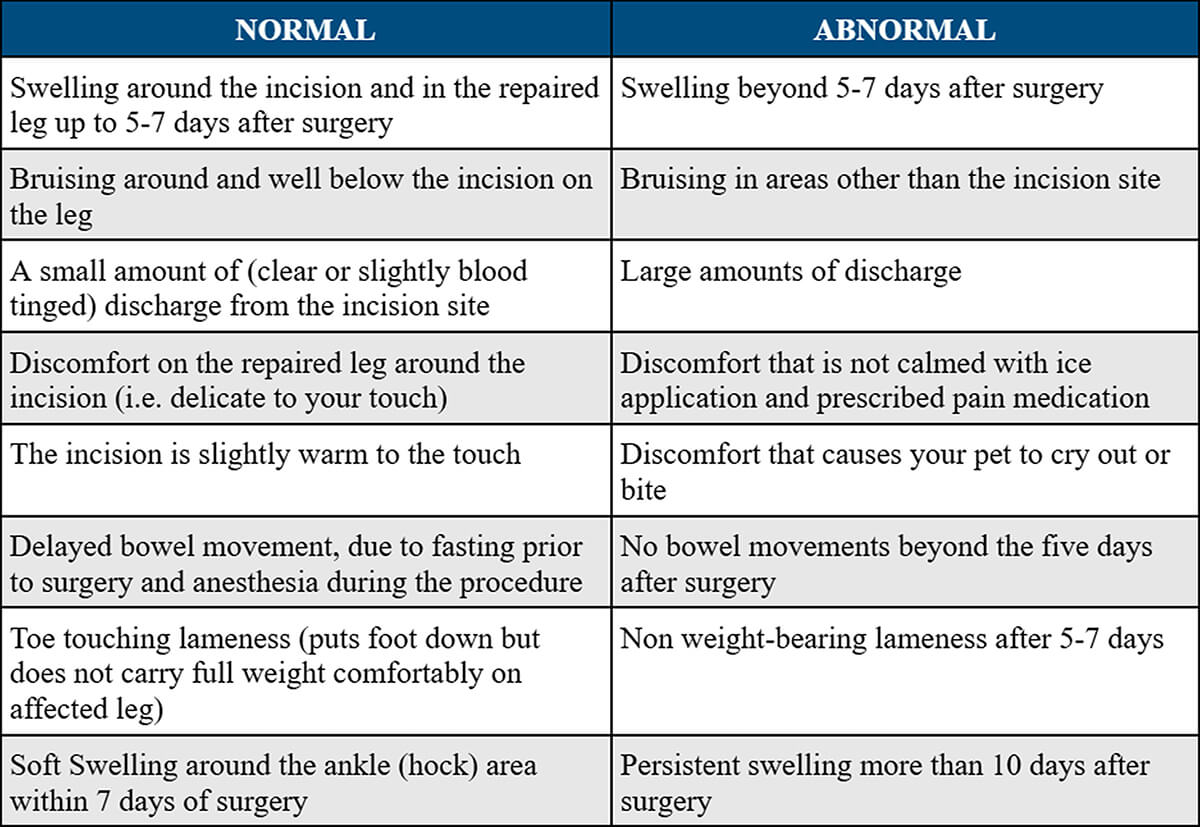
What’s Normal vs. Concerning
Normal signs include:
Mild swelling or bruising near the incision
Toe-touching lameness early in recovery
Slight warmth at the incision site (with no active discharge).
Structured Rehabilitation
Recovery follows a week-by-week progression, including:
Cold and moist heat therapy
Massage and passive range of motion (PROM)
Controlled leash walks
Gradual strengthening and balance exercises
Rehabilitation is introduced slowly and adjusted based on your dog’s comfort and progress.
We use cookies to ensure that we give you the best experience on our website. If you continue to use this site we will assume that you are happy with it.Accept