Cranial Cruciate Ligament (CCL) Repair
Understanding CCL Disease & Surgical Options
What Is Cranial Cruciate Ligament Disease?
The cranial cruciate ligament (CCL) is equivalent to the human anterior cruciate ligament (ACL). Cranial cruciate ligament disease (CrCLD) is the most common cause of hind limb lameness in the dog, and it affects a wide variety of dog breeds at various ages. It can also affect cats.
A CCL tear results in an unstable stifle (knee) joint and an inflammatory response that damages the cartilage and leads to osteoarthritis. Surgical stabilization is generally required and is recommended as soon as possible to reduce permanent, irreversible joint damage and to relieve pain.
Signs of CCL rupture/injury:
Dogs with CrCLD may exhibit any combination of the following signs:
- Difficulty rising from sitting or lying down
- Difficulty sitting (“positive sit test”)
- Trouble jumping into the car or onto furniture
- Decreased activity level or unwillingness to play
- Lameness (limping)
- Muscle loss (decreased muscle mass in the affected leg)
- Decreased range of motion of the knee joint
- A popping/clicking noise (which may indicate a meniscal cartilage tear)
- Pain
- Stiffness
Diagnosis:
- Orthopedic examination
- Cranial drawer test
- Cranial tibial thrust test
- Radiographs
Your pet should be evaluated as soon as possible if exhibiting any of these signs. Poor physical body condition and excessive body weight are risk factors for the development of CrCLD. Both factors can be influenced by pet owners. Consistent physical conditioning with regular activity and close monitoring of food intake to maintain a lean body mass is advisable. Pain and discomfort are expressed differently in people compared to dogs, so although dogs may not whine, cry out, or hold up their affected limb constantly, the persistence of their lameness is a sign of pain.
Common Stabilization Techniques:
Several surgical techniques are currently used to correct stifle instability secondary to CCL rupture. Each procedure has unique advantages and disadvantages. There continues to be debate on what is the best option offering the greatest success and ease of recovery. The best option for your pet depends on many factors, including their activity level, size, age, skeletal conformation, and degree of knee instability.
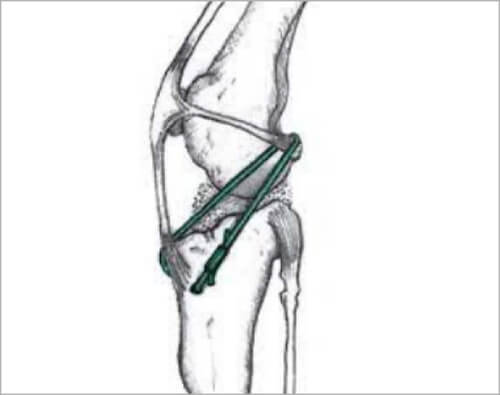
Lateral Fabellotibial Suture:
This surgical technique employs a prosthetic suture to effectively stabilize the stifle joint. It is particularly recommended for smaller breed dogs and cats, as well as patients with lower activity levels or those of advanced age.
The procedure offers a reliable solution tailored to the needs of less active or elderly companion animals, ensuring improved joint function and comfort.
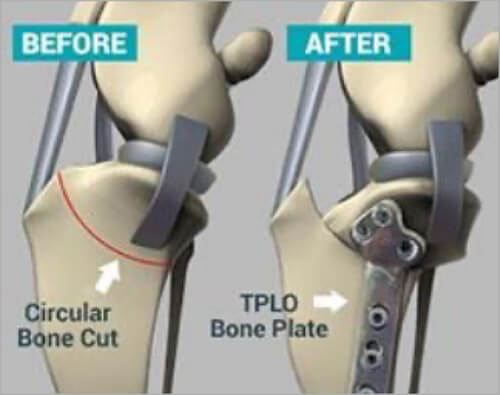
Tibial Plateau Leveling Osteotomy (TPLO):
TPLO involves making a semicircular cut in the tibial plateau, rotating it to a precise , predetermined position, and securing it with a bone plate and screws.
After healing, most dogs return to an active lifestyle. Removal of hardware is uncommon and only necessary if complications arise.
Recovery requires several weeks of restricted activity to ensure proper healing.
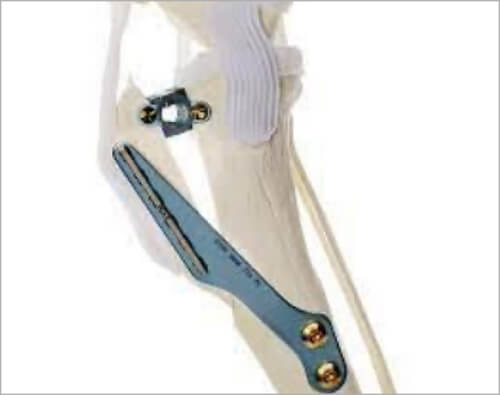
Tibial Tuberosity Advancement (TTA):
TTA requires a linear cut along the front of the tibia. The front of the tibia is moved forward to neutralize forces around the knee. The cut in the bone is stabilized using a specifically designed wedge, bone plate, and screws.
Similar to the TPLO, this procedure requires several weeks of confinement while the bone heals.
Home Recovery Program Post Surgery
Preparing Your Home
- Plan where your pet will be confined during recovery.
- Use a crate or gated area and avoid slippery surfaces.
House Rules & Activity Restriction
- No jumping: Do not allow your pet to jump on or off furniture, people, or any surfaces.
Jumping can compromise the surgical repair, delay healing, and cause complications. - No running or active play: Avoid all forms of running, roughhousing, or playing with other pets or children until cleared by your veterinarian.
- No stairs: Until cleared by your veterinarian, stairs should be avoided. If stairs are unavoidable (e.g., to go outside), use a short leash and support your dog’s rear limbs with a sling or towel. Block access to stairs inside your home with gates to prevent unsupervised use. Stairs put significant stress on the repair and can lead to surgical failure.
- No licking: Prevent your pet from licking the incision. Licking introduces bacteria, which can cause infection and delay healing. Infection from licking is the most common and preventable complication after CCL surgery.
- Avoid slippery surfaces: Use carpets or throw rugs with rubber backing to prevent slipping
and falling.
Confinement
- Restrict your pet to a crate, gated area, or small room during recovery.
- When outdoors for bathroom breaks, always use a short leash (less than 6 feet).
Pain Management
- Administer all prescribed pain medications as directed to keep your pet comfortable.
- Even if your dog seems to feel better, continue to restrict activity to avoid compromising the surgery and risking prolonged recovery or additional surgery.
Recovery Expectations
- Limping is normal after surgery; gradual improvement in weight-bearing on the surgical leg should occur each week.
- Excessive activity can worsen limping and prolong recovery.
- Compliance with these restrictions is crucial to prevent complications, implant failure, and the need for revision surgery.
During Recovery
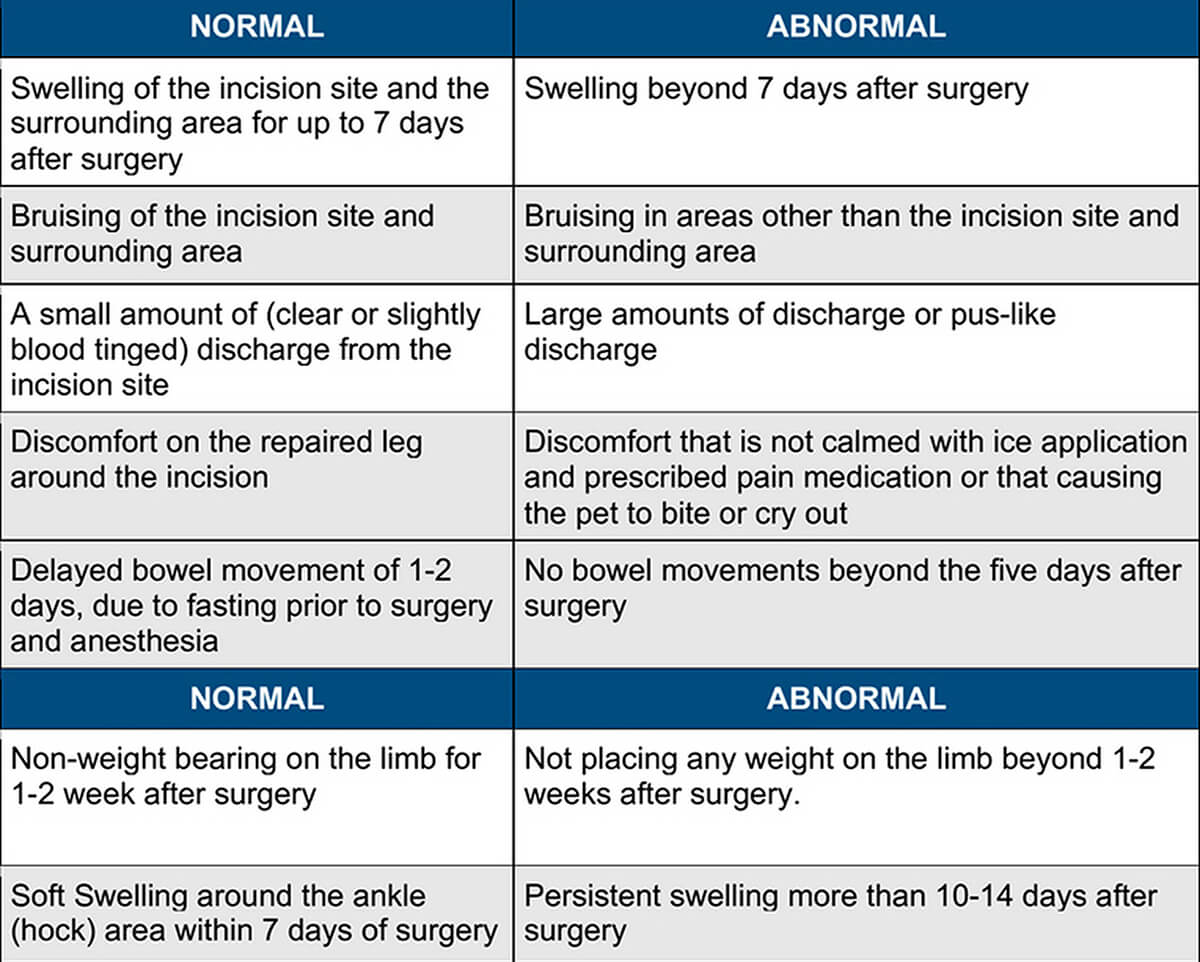
Additional Recommendations to Optimize Quality of Life:
Weight Management: Maintaining your pet at an ideal body weight is the most effective way to enhance both lifespan and quality of life. Research demonstrates that dogs kept at a healthy weight can live up to 15% longer than those who are overweight—equivalent to as much as two additional years for a Labrador Retriever-sized dog. We utilize a standardized body condition scoring system, rating your pet on a 9-point scale, with a score of 5 representing optimal health. If your dog’s score exceeds 6, a specialized weight management diet is strongly recommended. Excess body weight significantly increases the risk of osteoarthritis and other joint-related conditions. For personalized guidance and a tailored weight loss plan, please consult your primary care veterinarian.
Joint Health: Following surgical stabilization of your dog’s stifle (knee), it is important to recognize that any joint injury increases the risk of developing osteoarthritis. Osteoarthritis is a progressive condition characterized by chronic inflammation, formation of osteophytes (bone spurs), pain, scar tissue, and reduced mobility. To support joint health and minimize the impact of osteoarthritis, we recommend supplementing with nutrients that provide the essential “building blocks” for cartilage preservation, enhanced joint lubrication, improved shock absorption, and sustained mobility.
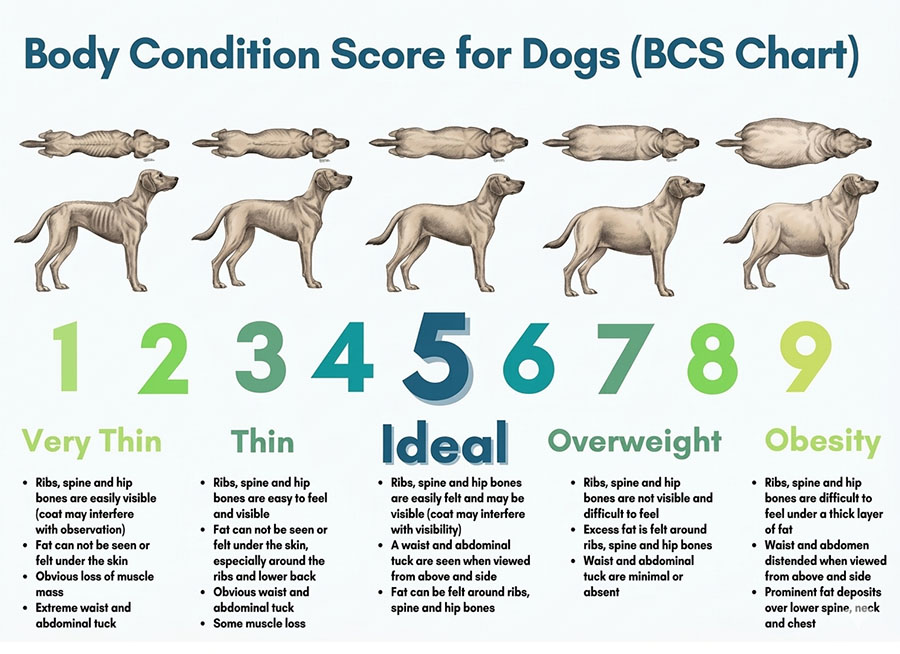
- Oral joint supplements: These “Nutraceuticals” are given orally as a tablet or powder on their food. There are many choices of joint supplements on the market. We recommend one that is formulated for dogs for best absorption, effect, and palatability.
- Joint Mobility Prescription Diets: Consult with your primary care veterinarian to determine if this type of diet is right for your pet.
- Omega 3 Fatty Acids: Research is showing that omega-3 fatty acids, especially EPA, may be helpful in reducing the inflammation associated with arthritis. You may supplement these separately or choose one of the above joint mobility diets which have superior levels.
Life-long physical fitness: Physical activity is important for your dog’s overall health and wellbeing. Dogs with regular physical activity live longer, healthier lives and have less behavior problems. Before beginning any program, you should consult with your primary care veterinarian. Any changes in activity level should be done gradually to avoid injury.